Archaeological Sites · Maharashtra, India
Ajanta Caves
The rock-cut Buddhist caves of Ajanta contain some of the finest surviving examples of ancient Indian painting.
Overview
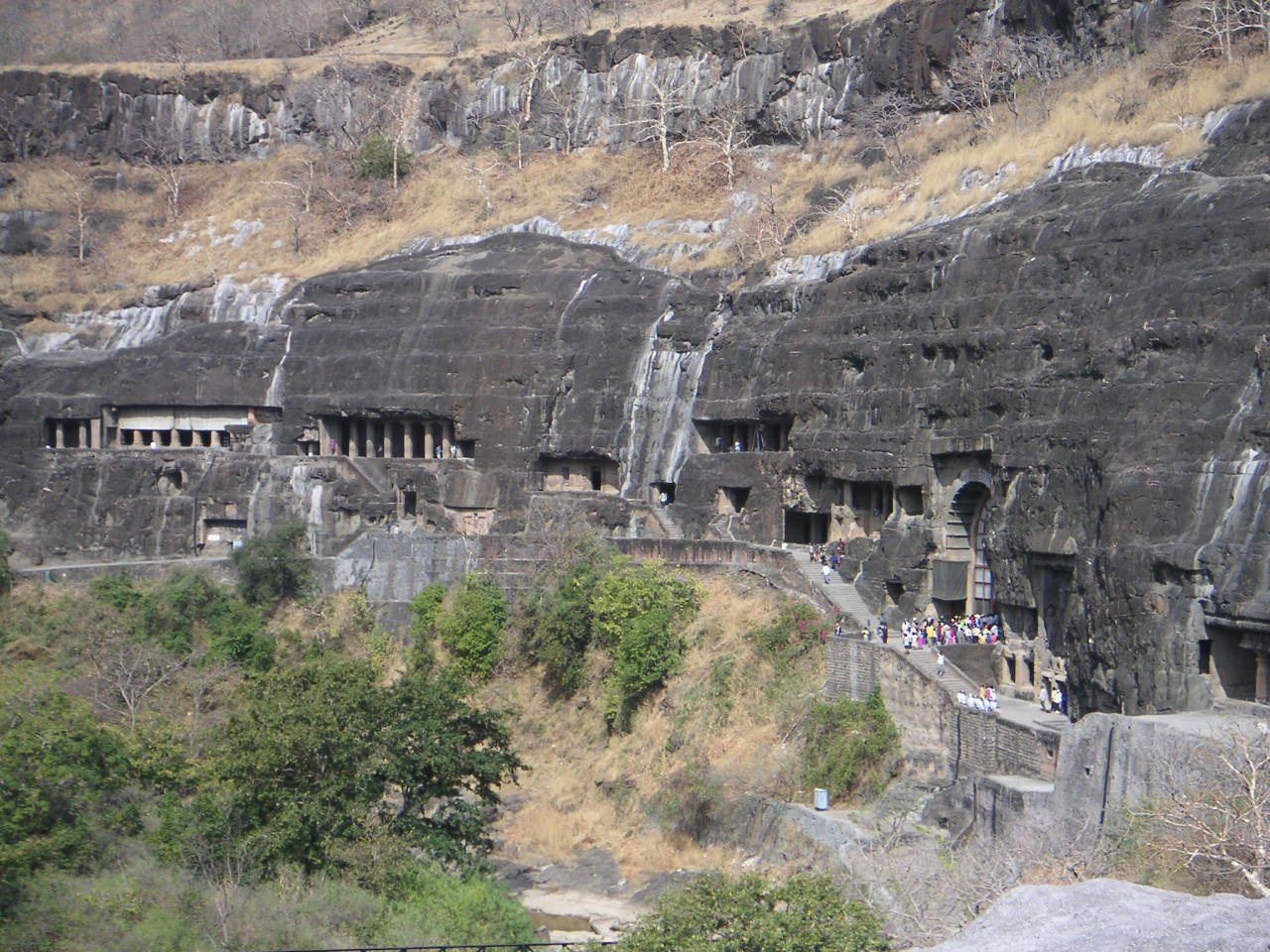
The Ajanta Caves are cut into a horseshoe-shaped cliff above the Waghur river in Maharashtra. Step out of the sunlight into one of the painted halls and, as your eyes adjust, faces begin to emerge from the walls – princes and dancers, merchants and monks, elephants and lotus ponds – all painted more than 1,500 years ago.
There are around thirty rock-cut caves, including chaityas (prayer halls) with vaulted ceilings and stupas, and viharas (monasteries) with cells for monks. The paintings illustrate stories from the life of the Buddha and the Jataka tales of his previous lives, and are counted among the masterpieces of ancient Indian art.
History
The caves were created in two main phases: the earliest around the 2nd–1st centuries BCE, and a second, richer phase in the 5th century CE under the Vakataka dynasty. Abandoned afterwards, they were hidden by jungle for centuries until a British officer came across them in 1819 while hunting. Ajanta was among the first Indian sites inscribed on the UNESCO World Heritage List, in 1983.
Significance
Ajanta's murals and sculptures are among the best-preserved examples of early Buddhist art anywhere and have influenced painting traditions across Asia.
How to reach
Ajanta lies about 100 km from Chhatrapati Sambhajinagar (Aurangabad), which has an airport and railway station, and about 60 km from Jalgaon railway station. Private vehicles stop at a visitor centre, from where eco-friendly buses take visitors to the caves. Flash photography is not allowed in order to protect the paintings.
Frequently asked questions
Are Ajanta and Ellora the same?
How old are the Ajanta paintings?
Sources & references
- UNESCO World Heritage List – UNESCO World Heritage Centre (1983) , retrieved 10 Oct 2026 – Inscription year Reported