Forts and Palaces · Jaipur, Rajasthan, India
Hawa Mahal
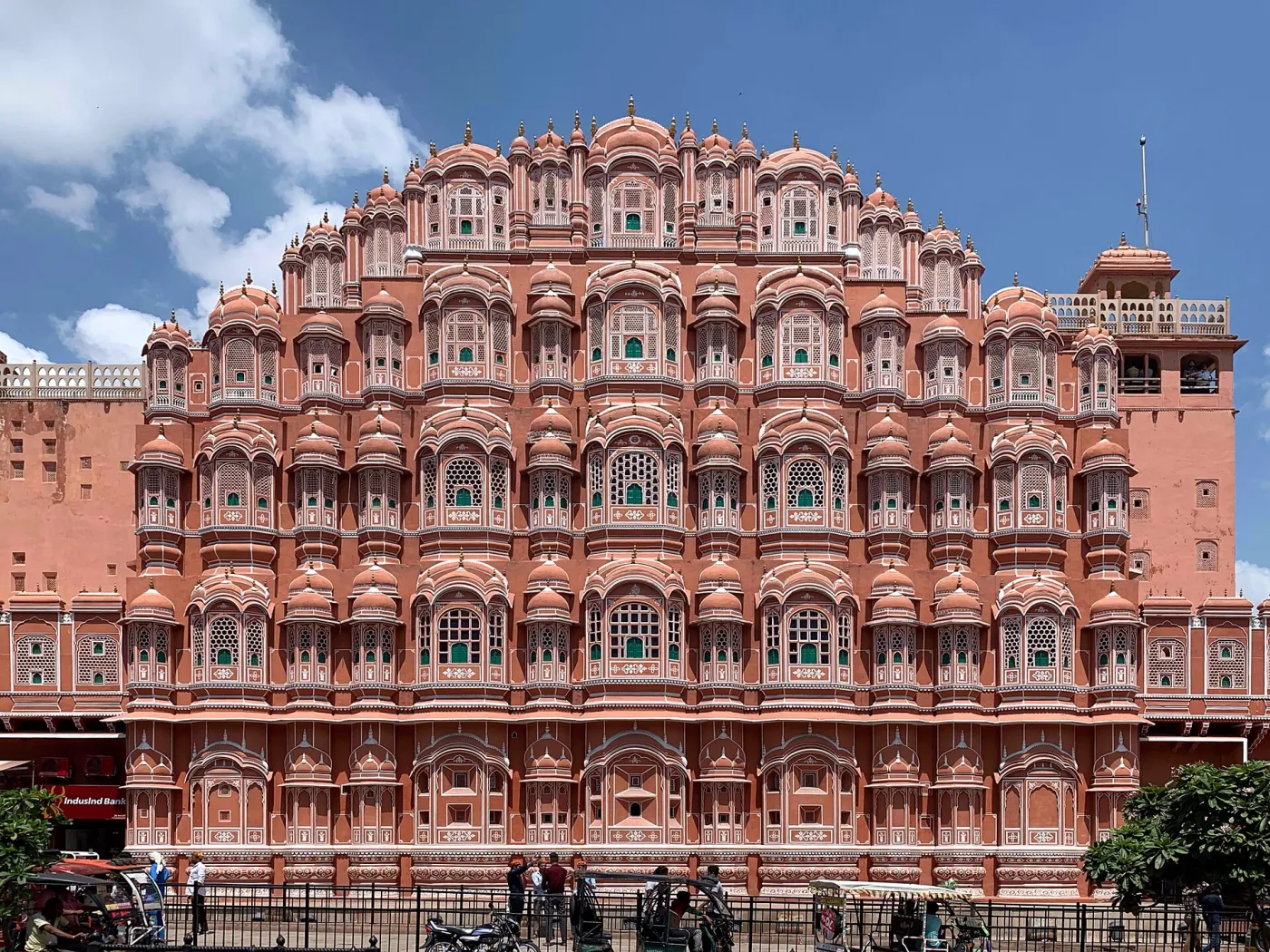
Hawa Mahal, the “Palace of Winds”, is a pink sandstone façade with hundreds of small latticed windows in Jaipur's old city.
Overview
From the street in Jaipur's old city, the Hawa Mahal looks like a giant honeycomb of pink sandstone – five storeys of tiny latticed windows (jharokhas) stacked into a pyramid. Climb the ramps inside and you discover that the "palace of winds" is only a few rooms deep: it was built as a screen, so that women of the royal household could watch festivals and street life without being seen.
The small windows also funnel breezes through the building, keeping it cooler in Jaipur's summer heat – the reason for its name. From the top levels you look straight down onto Siredeori Bazaar and across to the Jantar Mantar observatory and the City Palace.
History
The Hawa Mahal was built in 1799 by Maharaja Sawai Pratap Singh of the Kachhwaha dynasty, the grandson of Jaipur's founder Sawai Jai Singh II. Its design is usually credited to the architect Lal Chand Ustad. The building is an extension of the City Palace complex and today is maintained by the Rajasthan Department of Archaeology and Museums.
Significance
The palace is the best-known emblem of Jaipur, the "Pink City", whose walled historic centre was inscribed on the UNESCO World Heritage List in 2019. Its façade blends Rajput decorative traditions with Mughal-influenced arches and domes.
How to reach
Hawa Mahal stands on Badi Chaupar in the walled city of Jaipur. Jaipur International Airport and Jaipur Junction railway station are both a short taxi ride away; the Jaipur Metro also has a Badi Chaupar station nearby. The best photographs of the façade are taken from the rooftop cafés across the road.