River
Godavari
The Godavari is the longest river of peninsular India, rising near Trimbakeshwar in Maharashtra and flowing east to the Bay of Bengal.
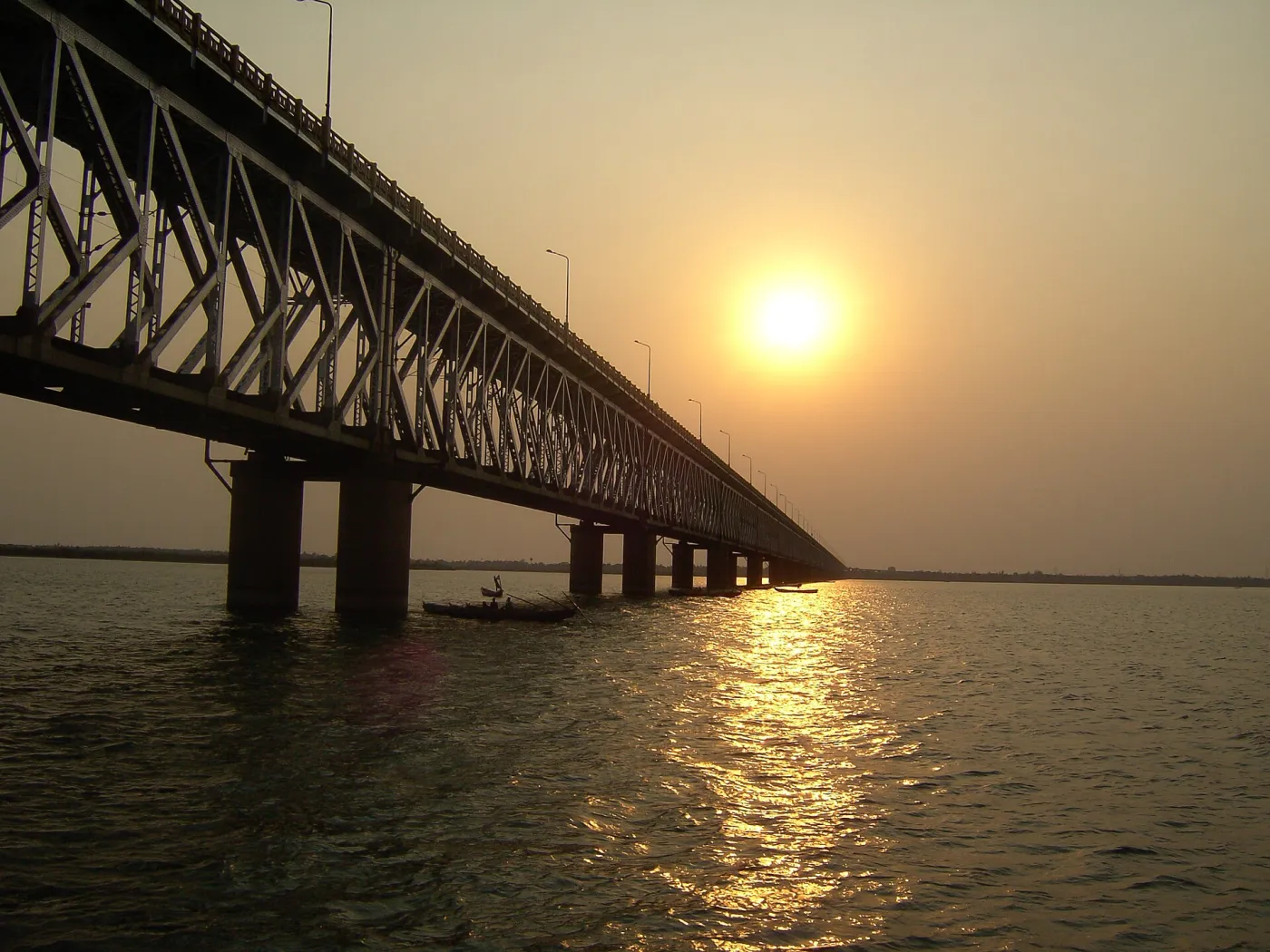
The Godavari rises at Trimbakeshwar near Nashik in Maharashtra, only about 80 km from the Arabian Sea – and then flows the other way, right across the Deccan Plateau to the Bay of Bengal. It is the longest river of peninsular India, and its size and sanctity have earned it the name Dakshina Ganga, the "Ganga of the South".
Flowing through Maharashtra, Telangana and Andhra Pradesh, the river collects major tributaries such as the Manjira, the Pranhita – itself formed by the Wardha and Wainganga – and the Indravati. Below Rajamahendravaram it opens into a fertile delta of rice fields and coconut groves, one of the most productive farming regions of southern India.
The Godavari is sacred to many communities. Nashik on its banks is one of the four hosts of the Kumbh Mela, and the Pushkaram festival is celebrated along its course every twelve years.
Tributaries
Pravara, Manjira, Pranhita (Wardha–Wainganga), Indravati, Sabari