National Park
Sundarbans National Park
The Sundarbans, in the Ganga–Brahmaputra delta, form one of the largest mangrove forests in the world and are a UNESCO World Heritage Site (1987).
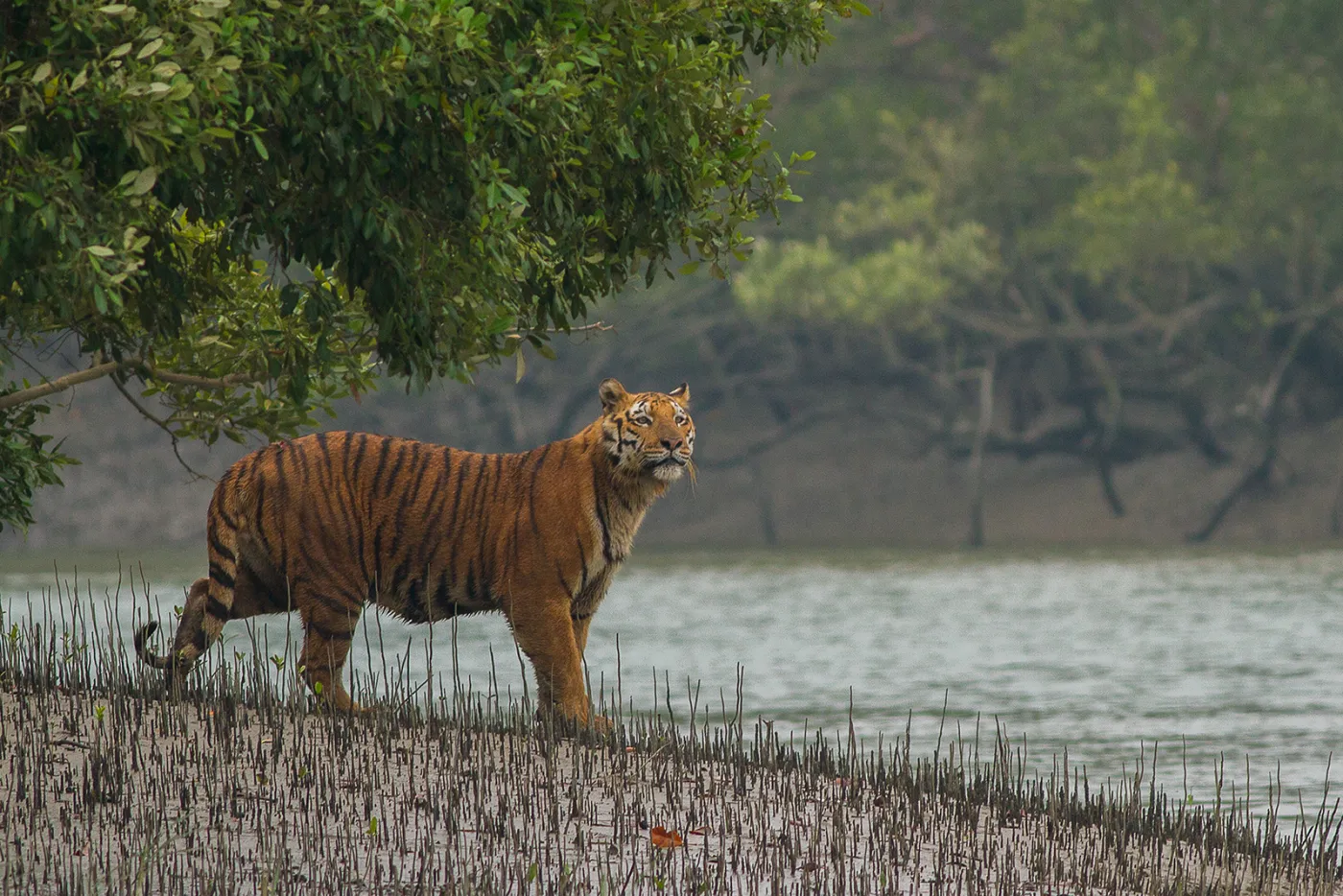
Where the Ganga, Brahmaputra and Meghna meet the sea, a maze of tidal rivers, creeks and mudflats is covered by the largest mangrove forest in the world – the Sundarbans, shared by India and Bangladesh. Travelling here means days on a boat, watching kingfishers dart across the channels, crocodiles basking on the banks, and the forest edge for any sign of its most famous resident.
The Sundarbans are home to the Royal Bengal tiger, uniquely adapted to swimming between islands and living in a saline environment. The forest also shelters estuarine crocodiles, river terrapins, spotted deer and the Ganges and Irrawaddy dolphins, and it protects the coast from cyclones and storm surges.
The Indian Sundarbans National Park was inscribed as a UNESCO World Heritage Site in 1987. Boat trips leave from Godkhali and Sajnekhali, south of Kolkata, with permits from the West Bengal Forest Department.